
Female Pattern Baldness
One of the most common hair loss conditions that females suffer from is androgenetic alopecia, commonly known as Female Pattern Baldness (FPB) which is a hereditary condition passed on from the maternal and/or paternal side of the family.
You can identify your FPB and its progression using the Ludwig scale.
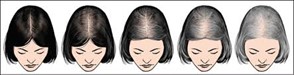
Andogenetic female hair loss is more complex in nature but the hormone DHT (dihydrotestosterone) is also implicated for affecting hair follicles in genetically susceptible women. The ovaries and adrenal glands produce a hormone with is converted to Testosterone, which in turn is converted in the hair follicle cells by an enzyme 5-alpha-reductase into DHT. This DHT attacks the hair follicles causing them to shrink, affecting the hair growth cycle, leading to hair loss.
In females, the pattern of hair loss is different compared with men. There is general thinning of hair around the top and crown of the head.
You may notice that the parting of the hair also becomes wider.
Alopecia areata
This type of hair loss can occur at any time throughout one’s life. It is caused by the body’s immune system attacking hair follicles at a particular place on the scalp.
In severe conditions, complete loss of hair can result (alopecia totalis)
Telogen Effluvium
This is a form of temporary hair loss that usually happens after stress, shock or any traumatic event. Nutritional deficiencies can also cause this. This type of hair loss can happen all over the scalp and can trigger androgenetic hair loss in certain susceptible individuals
This condition in some cases can also get chronic and is then known as diffuse hair loss or Chronic Telogen Effluvium. The underlying medical condition/s need to be addressed. Factors that may cause this are: stress, starting or stopping contraceptives, Thyroid issues, anaemia, side effects of medication.